




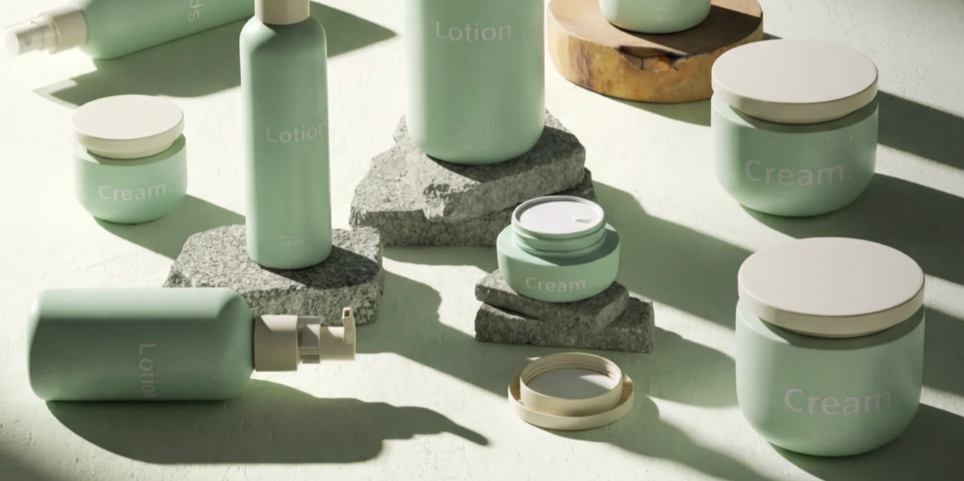
As Europe continues to strengthen its position as a global leader in the beauty and cosmetics sector, a quiet revolution is transforming how products reach consumers. It's not just about what's inside the bottles and jars anymore—it's about the packaging itself that contains them.
The European Union has intensified environmental regulations in recent years, and the manufacturing sector, with its long tradition in design and quality, finds itself at the center of this transformation. Cosmetic companies known for their attention to quality and aesthetics are now facing a challenge that requires as much innovation as creativity: how to maintain luxury while reducing environmental impact.
European Regulatory Pressure
The European Packaging and Packaging Waste Directive has set ambitious targets: by 2030, all packaging in the EU must be reusable or recyclable in an economically viable way. This means beauty brands, from small artisan producers to major cosmetic houses, must completely rethink their packaging strategies.
The figures are telling: the European cosmetics industry generates over €80 billion annually but also produces hundreds of thousands of tons of packaging waste. The transition to more sustainable models is no longer an option—it's an economic and legal necessity.
According to recent market research, 73% of European consumers say they would change their consumption habits to reduce environmental impact, and 81% feel strongly that companies should help improve the environment. This isn't just regulatory compliance; it's market demand driving fundamental change.
Beyond Greenwashing: Concrete Solutions
Many consumers have become increasingly skeptical of superficial environmental claims. The term "greenwashing" has entered common vocabulary, and customers demand concrete proof, not just slogans. This is where genuine technological innovations are making a difference.
Eco-friendly cosmetic packaging represents much more than a passing trend. It's a fundamental rethinking of the entire supply chain, from material selection through to product end-of-life. The most advanced solutions combine aesthetics, functionality, and environmental sustainability without compromise.
Traditional materials like glass are experiencing a renaissance, but with a modern approach. High-quality recycled glass offers the same crystal transparency and premium weight that consumers expect from luxury brands, but with a significantly reduced carbon footprint. Similarly, plastic alternatives are evolving rapidly, driven by both technological advancement and market necessity.
The innovation is in the entire ecosystem. Brands are partnering with recycling facilities, investing in take-back programs, and designing products with circular economy principles from the very beginning. This systemic thinking represents a maturation of the sustainability movement beyond simple material substitution.
The PCR Revolution: High-Performance Recycled Plastic
One of the most significant innovations in the sector is the large-scale adoption of PCR (Post-Consumer Recycled) materials. Unlike virgin plastics derived from petroleum, PCR cosmetic packaging uses existing plastic that has been collected, cleaned, and reprocessed to create containers with quality comparable to new materials.
PCR technology has made extraordinary progress in the last five years. Early attempts to use recycled plastic in cosmetic packaging presented significant challenges: irregular coloration, reduced structural strength, and compatibility problems with delicate cosmetic formulas. Today, thanks to advances in purification and reprocessing technology, PCR can achieve levels of transparency, chemical resistance, and oxygen barrier properties comparable to virgin materials.
For brands, this represents an important competitive advantage. They can communicate concrete percentages of recycled content—often between 50% and 100%—providing consumers with verifiable data on reduced environmental impact. A 50ml bottle made with 100% PCR, for example, can reduce CO2 emissions by up to 70% compared to an equivalent virgin plastic container.
The quality standards have become so high that luxury brands, traditionally the most demanding about packaging aesthetics, are now confidently adopting PCR materials. The latest PCR formulations can be manufactured in crystal-clear transparency, deep blacks, or custom colors while maintaining the tactile premium feel that high-end consumers expect.
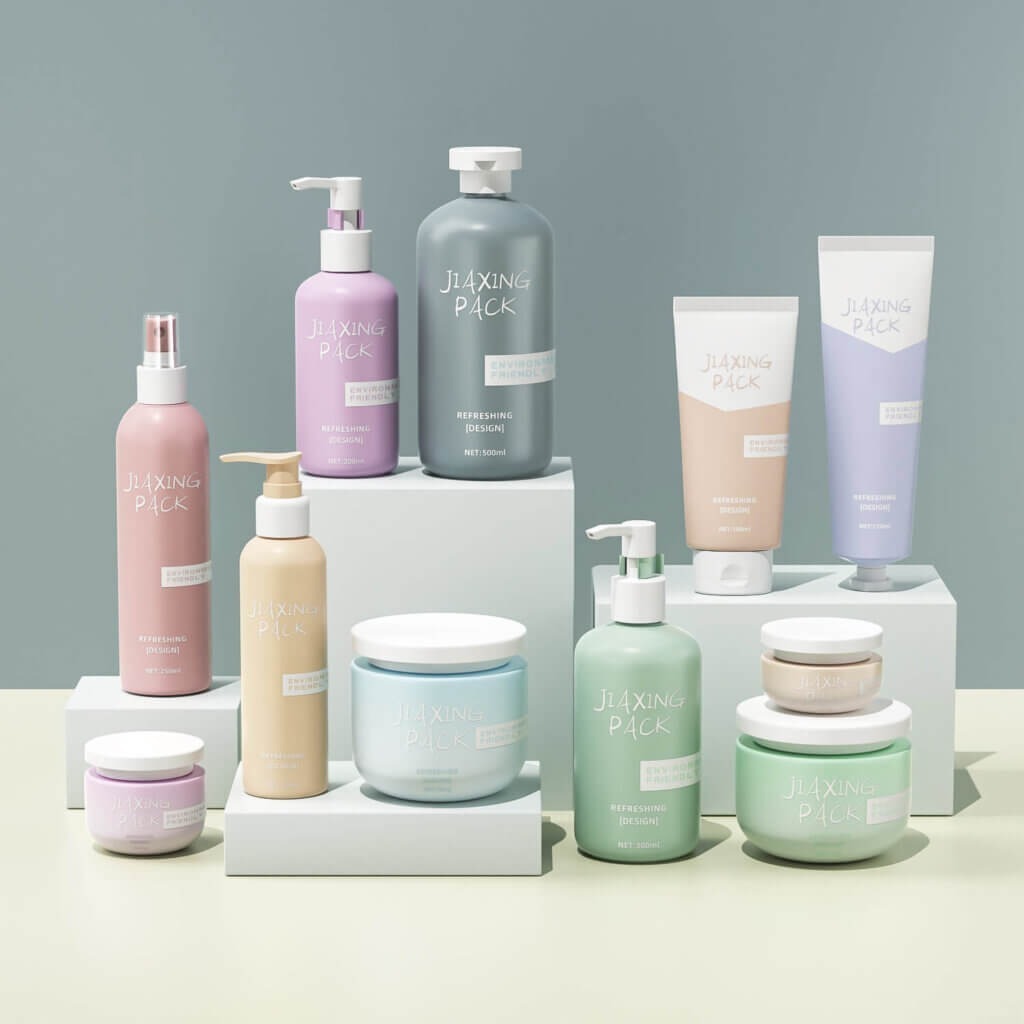
Jarsking's PCR personal care packaging
Circular Design: From Product to System
But true innovation goes beyond simply changing materials. The circular economy requires systemic rethinking: how can we design packaging that never ends up in landfills?
Refill systems are gaining popularity, especially among premium brands. A durable and aesthetically refined outer container is sold once, while consumers purchase refills with lower environmental impact. This model not only reduces waste but can also strengthen brand loyalty by creating an emotional investment in the main container.
Leading manufacturers are also exploring modular systems where different packaging components can be easily separated for recycling. A metal pump dispenser can be removed and recycled separately from the glass bottle, which in turn is separated from the compostable material label. Each element is designed from the beginning with its end-of-life in mind.
These refillable and modular designs represent a shift in business model thinking. Instead of selling disposable products, brands are selling durable goods with consumable refills. This creates recurring revenue while dramatically reducing material consumption. Some forward-thinking companies report that refill systems reduce packaging waste by 70-85% compared to traditional single-use containers.
Material Innovation Beyond PCR and Glass
While PCR and recycled glass dominate current sustainable packaging solutions, emerging materials are pushing boundaries even further. Bioplastics derived from algae, corn starch, and sugarcane are becoming commercially viable for cosmetic applications. These materials can offer similar performance to traditional plastics while being biodegradable or compostable under the right conditions.
Mushroom-based packaging materials, grown rather than manufactured, are being explored for secondary packaging and shipping materials. These mycelium-based solutions grow into custom shapes in just days, require minimal energy, and completely decompose in home composting systems within weeks.
Paper and cardboard innovations are also transforming the sector. Water-resistant, printable paperboard materials can now replace plastic tubes and jars for certain product categories. These materials maintain structural integrity even in humid bathroom environments while remaining fully recyclable in standard paper waste streams.
The Manufacturing Challenge
For cosmetic manufacturers, especially small and medium enterprises that represent the backbone of the industry, this transition presents both challenges and opportunities. Challenges include higher initial costs for innovative materials, the need for rigorous environmental certifications, and management of more complex supply chains.
Minimum order quantities for sustainable materials often exceed what smaller brands can commit to, creating barriers to entry. The testing and validation process for new materials can take months, requiring significant upfront investment before a single unit is sold. Regulatory compliance across different markets adds another layer of complexity, as sustainability standards and recycling infrastructure vary considerably between countries.
However, the opportunities are significant. Consumers, especially younger generations, are willing to pay a premium for authentically sustainable products. According to market studies, Gen Z and Millennial consumers will pay 10-25% more for products with verifiable sustainable credentials. Brands that can demonstrate solid environmental credentials through packaging differentiate themselves in a crowded market. Additionally, anticipating future regulations reduces the risk of facing costly last-minute adjustments.
Early adopters of sustainable packaging are also finding unexpected benefits: enhanced brand reputation, increased media coverage, and stronger relationships with retailers who are increasingly demanding sustainable options. The sustainability narrative itself becomes a marketing asset, generating organic social media engagement and word-of-mouth promotion.
Certifications and Transparency
A crucial aspect of this transition is verifiable transparency. Informed consumers seek internationally recognized certifications: ISO 14001 for environmental management, FSC certification for paper materials from sustainable sources, Ocean Plastic certifications for plastics recovered from oceans, and Cradle to Cradle certifications for circular design.
Serious companies are publishing detailed sustainability reports, conducting Life Cycle Assessments (LCA) of their packaging, and openly communicating both successes and areas for improvement. This honesty builds trust in a market saturated with unverified environmental claims.
The most sophisticated brands are now publishing carbon footprint data at the SKU level, allowing consumers to compare the environmental impact of different product options. Blockchain technology is being explored to create immutable records of material sourcing and recycling processes, providing ultimate transparency and traceability.
Third-party verification has become essential. Independent audits by organizations like B Corporation, EcoVadis, and various national green seal programs provide credibility that self-declared sustainability claims cannot match. These certifications require comprehensive documentation, regular re-assessment, and continuous improvement commitments.
The Path Forward
The road to zero-impact packaging is still long, but every recyclable bottle, every refill used, every material innovation represents a step in the right direction. For consumers who care about both beauty and the planet, the future of cosmetic packaging has never looked brighter—and more sustainable.
The transformation of cosmetic packaging from linear consumption to circular systems represents one of the most significant industrial shifts of our time. It requires collaboration across the entire value chain: material scientists developing new sustainable substrates, manufacturers investing in new production capabilities, brands redesigning products with end-of-life in mind, retailers supporting sustainable options, and consumers making informed choices.
Success will come not from any single solution but from a portfolio of approaches tailored to different products, markets, and use cases. Glass may be optimal for premium serums, PCR plastic for high-volume body care, bioplastics for travel-size products, and refill systems for staple items. The key is matching the right sustainable solution to each specific application while maintaining product integrity and consumer experience.
As regulations tighten, consumer awareness grows, and technology advances, sustainable packaging will transition from competitive differentiator to baseline expectation. The brands and manufacturers investing now in genuine sustainability—not superficial greenwashing—are positioning themselves for long-term success in an industry where environmental responsibility and business performance are increasingly inseparable.
Informazioni fornite in modo indipendente da un nostro partner nell’ambito di un accordo commerciale tra le parti. Contenuti riservati a un pubblico maggiorenne.